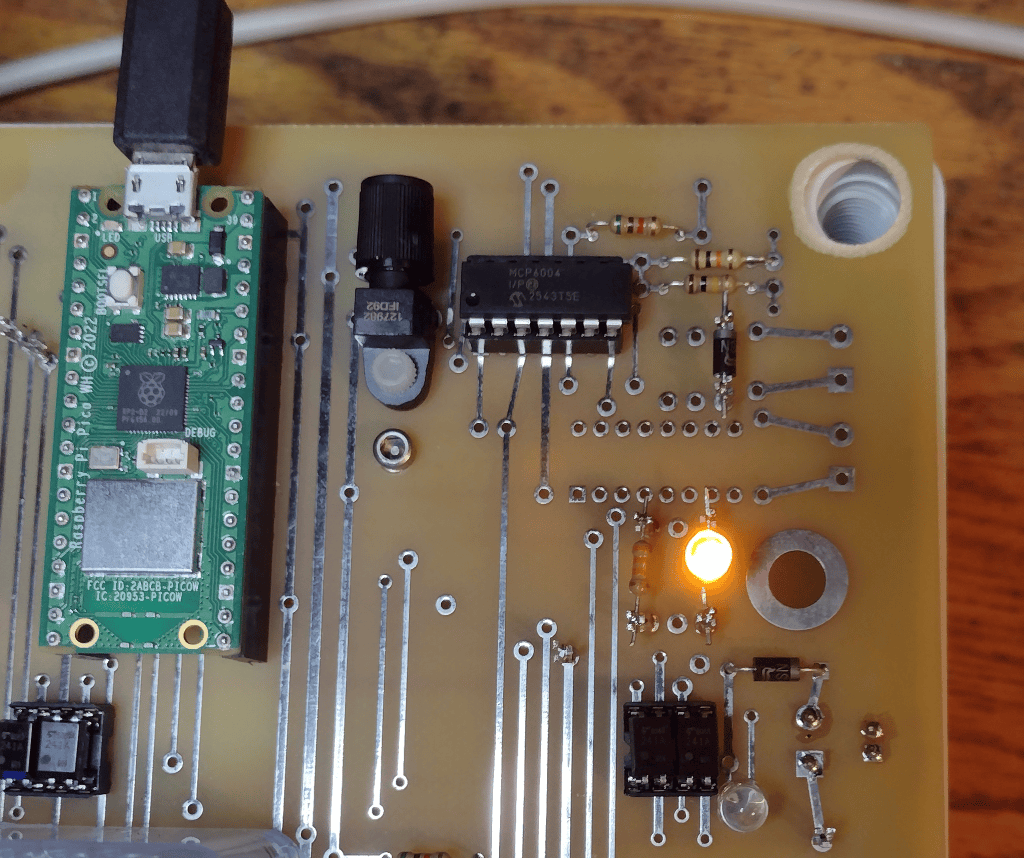
The pumps (in both versions of the PI) and solenoid valves (deluxe version, or user added) are easy to replace, and we haven’t had one burn out yet, but how would a user tell if one did fail? The symptoms might be similar to some other failure modes, like a gas line getting blocked or disconnected. So I’ve been testing a simple and inexpensive way to let you know when these devices are working normally.
The pumps and valves are controlled by pulse-width modulation (PWM) from the Raspberry Pico, where an output pin is either low or high with a duty cycle of 0 to 100% of the time. I send that PWM signal to solid-state relays that switch 12-volts on and off to the pumps or valves about 15 times per second. The frequency doesn’t change, but the greater the PWM duty cycle, the faster the pumps run or the more gas flow goes through the valves.
Here’s the trick. When a valve or motor turns off, the coil tries to send a little burst of electricity back into the system. To keep this surge from damaging anything, I added “flyback” diodes. It occurred to me that if I used an LED for the flyback diode, the LED might flash every time a motor or valve did its thing. Whereas, if the coil burned out (or the device got disconnected), there would be no surge and no flash. Perplexity/Claude recommended putting the LED in series with the existing flyback diode rather than replacing it. The lit LED in the photo shows a successful test of this approach, which I’ll include in the final version of the PI.


Leave a Reply