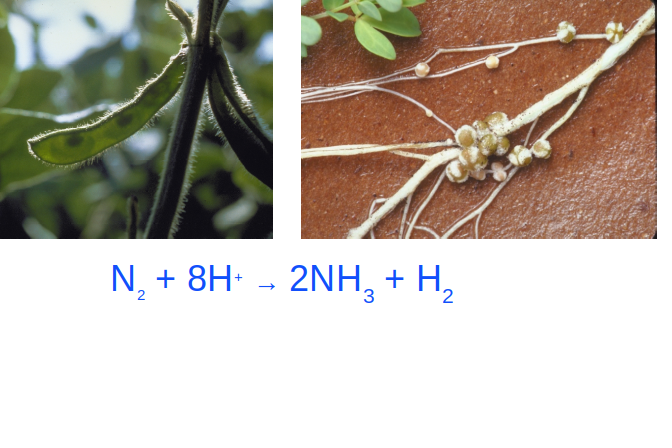
Nitrogen in legume seeds mostly comes from air, via root-nodule bacteria (rhizobia) that make hydrogen gas as a byproduct. 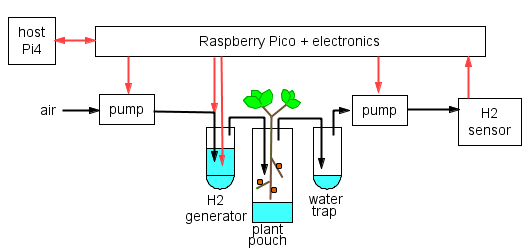
The PI instrument measures hydrogen production (concentration times flow rate), which is proportional to nitrogen fixation rate. 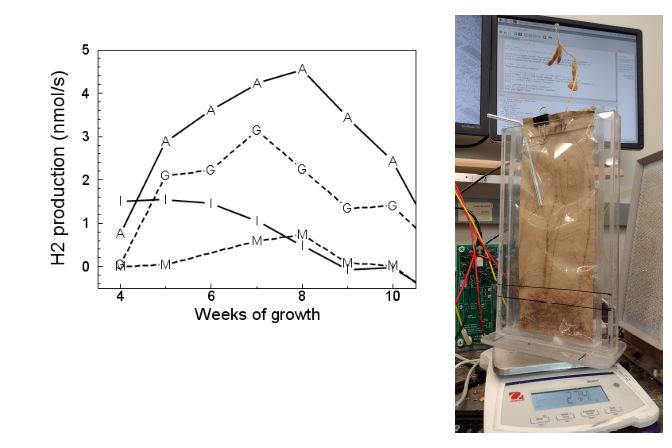
Our software measures H2, photographs roots & shoots, weighs plants. 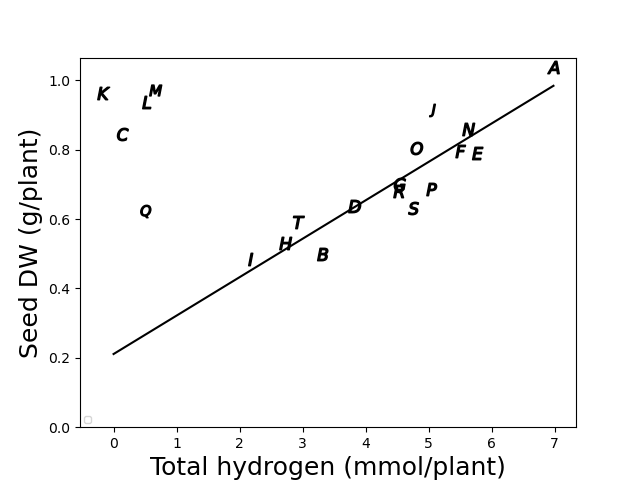
Yield correlation with total H2 production shows link to N fixation (except with rhizobia strains that recycle H2, upper left). 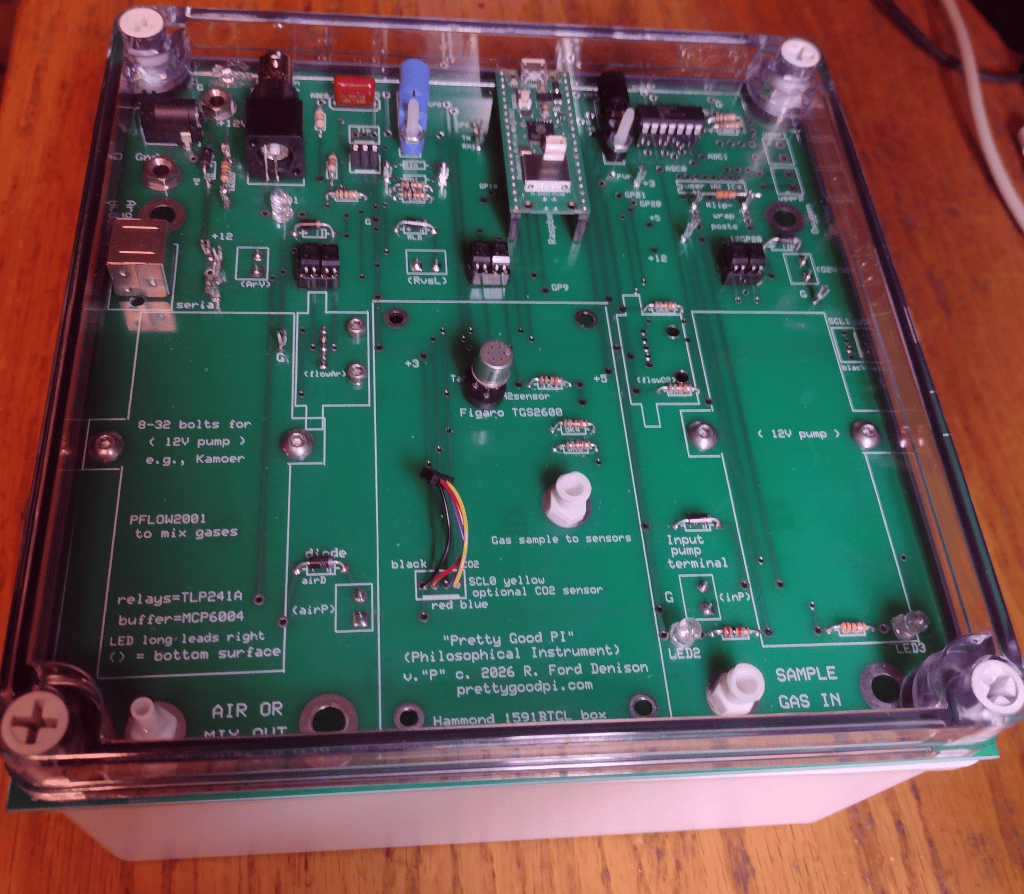
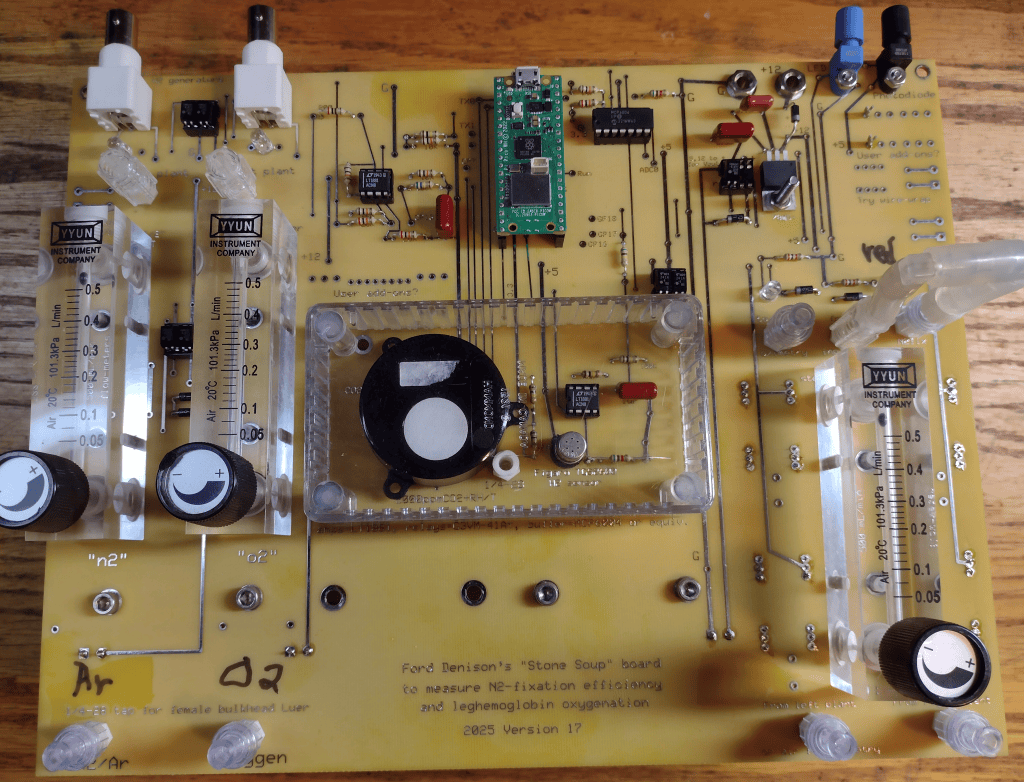
A PI is shipped mounted on a box and protected with a clear cover. 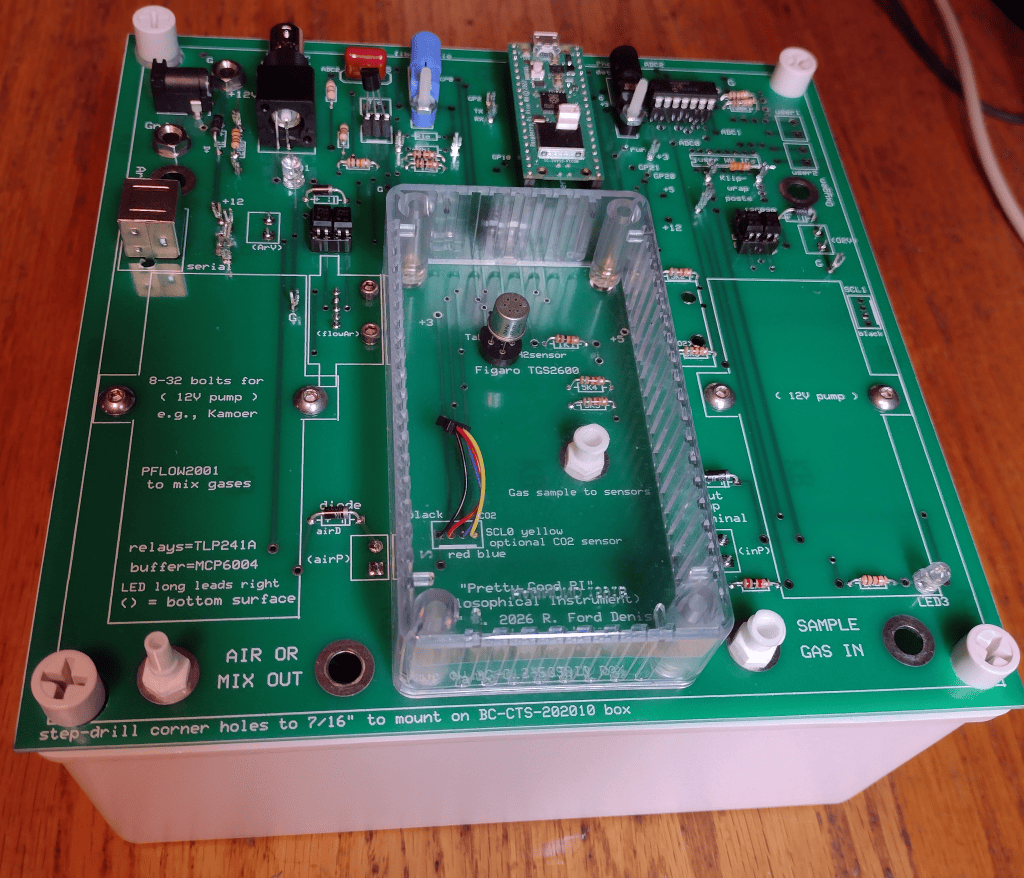
Replace the cover with a small, clear chamber to enclose H2 sensor. 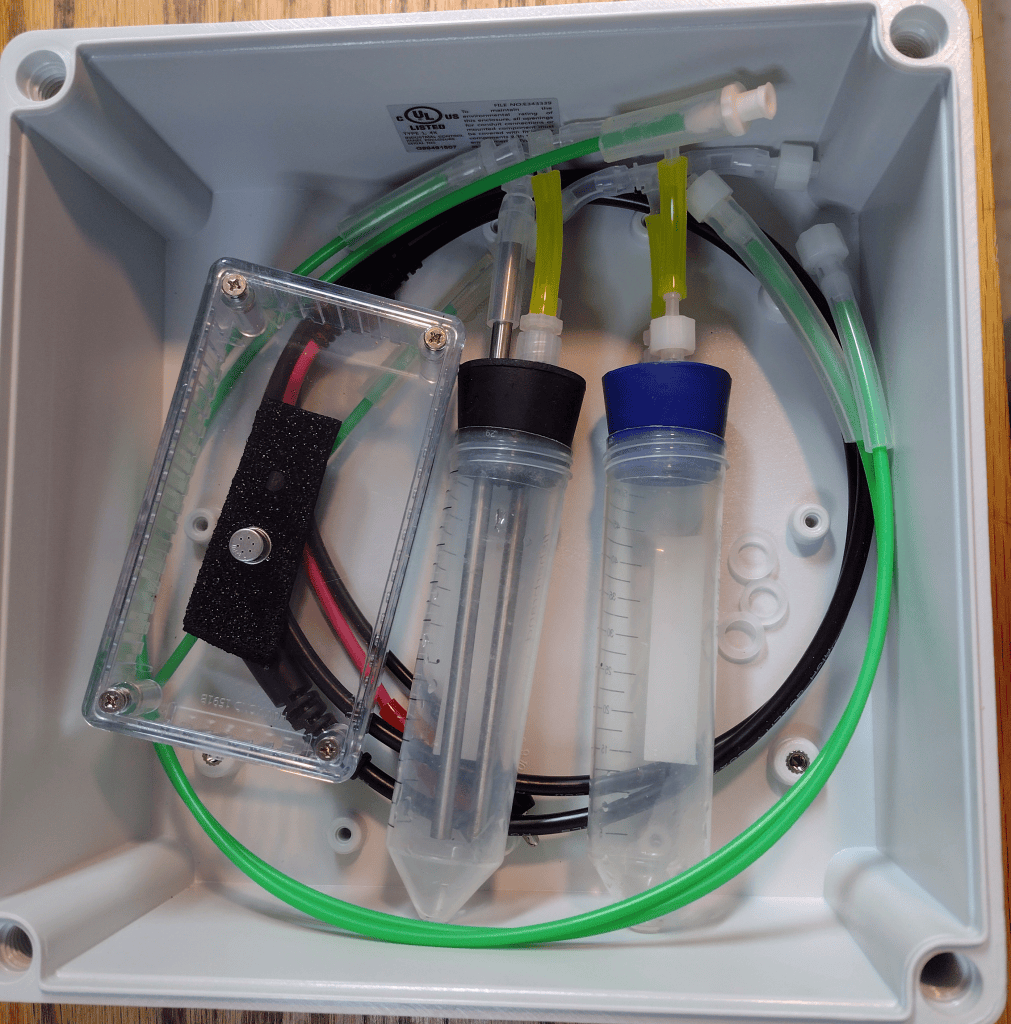
Chamber, H2-generator for calibration, and water-trap are included. 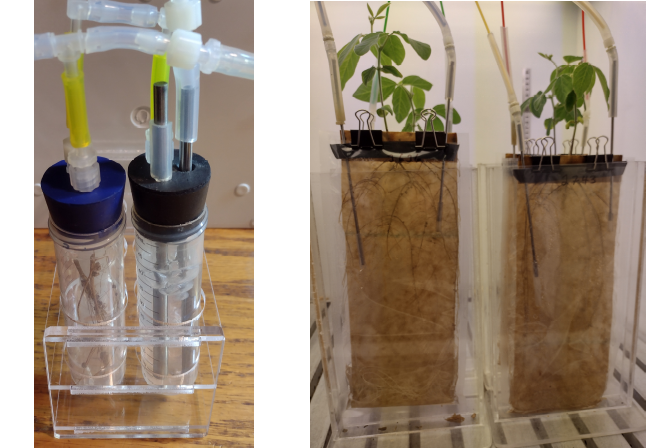
Put nodulated roots in water trap to measure H2 production, or use gaskets to turn growth pouches into cuvettes to assay intact plants. 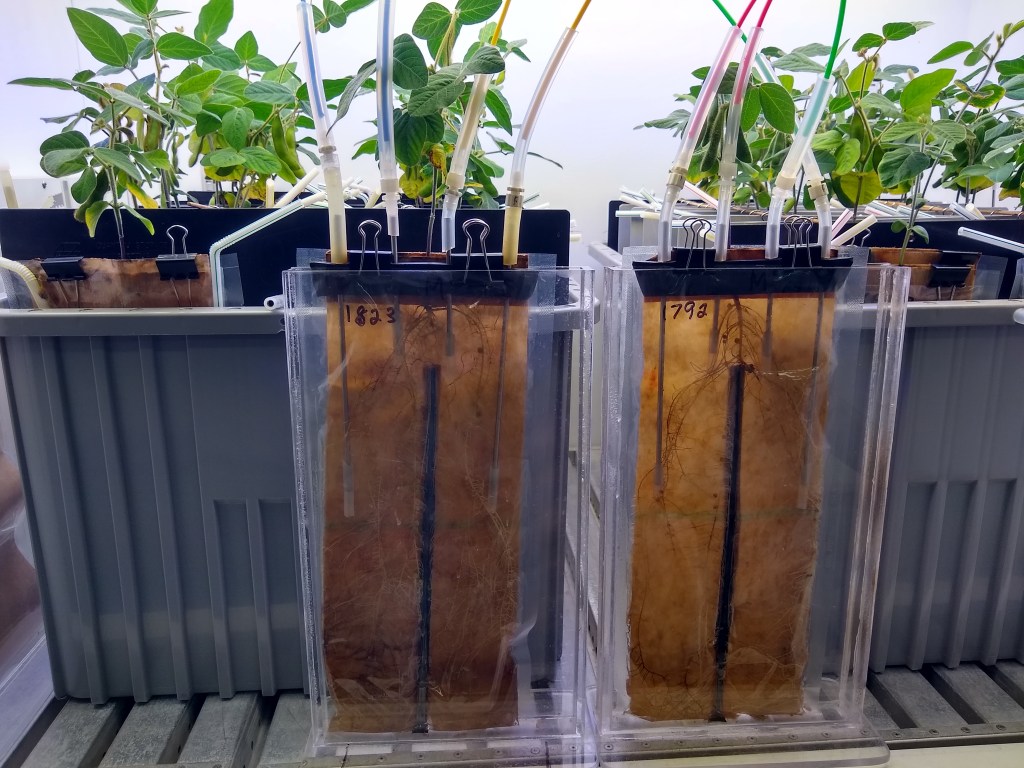
With two PI instruments you can assay split pouches with different rhizobia on the two sides, or two nonsplit pouches at once. 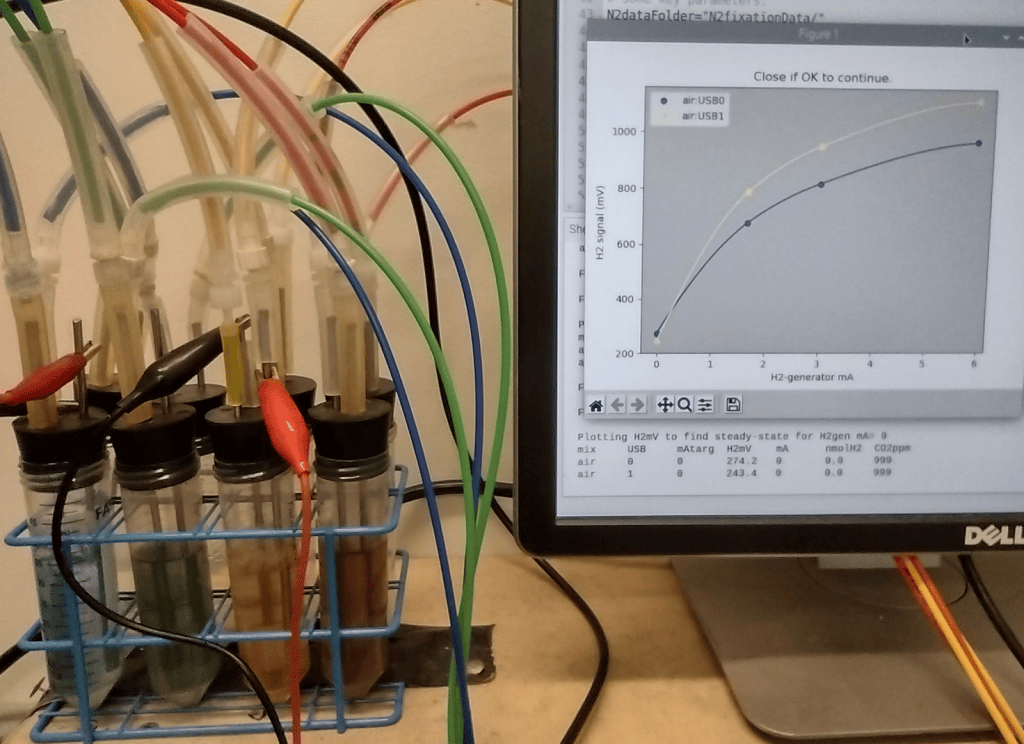
If you have two PI’s, software calibrates both, by electrolysis. 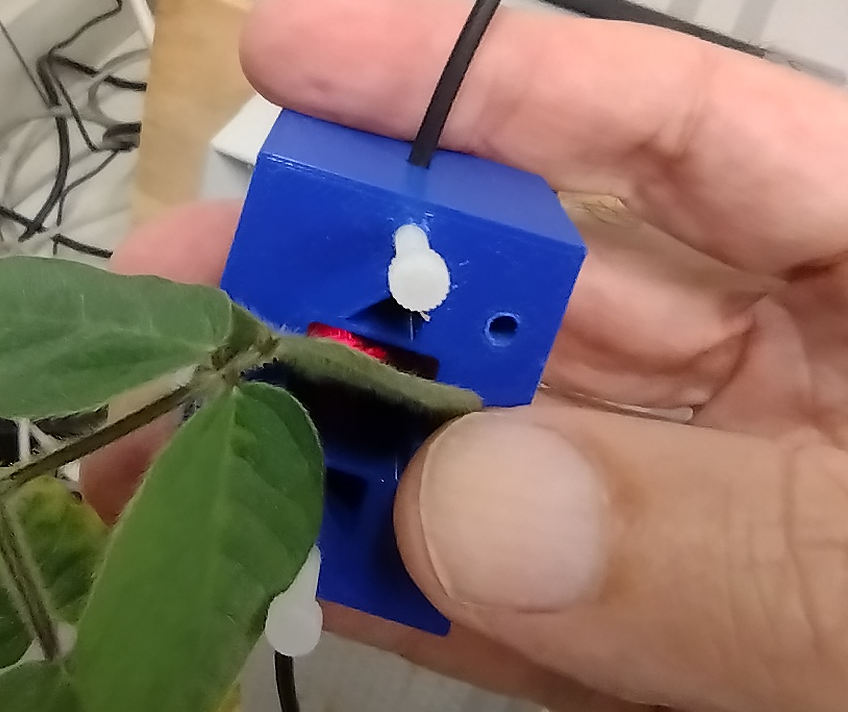
Download a file to 3D-print a cuvette and measure light transmission of leaves (decreases with leaf N) or density of bacterial cultures. 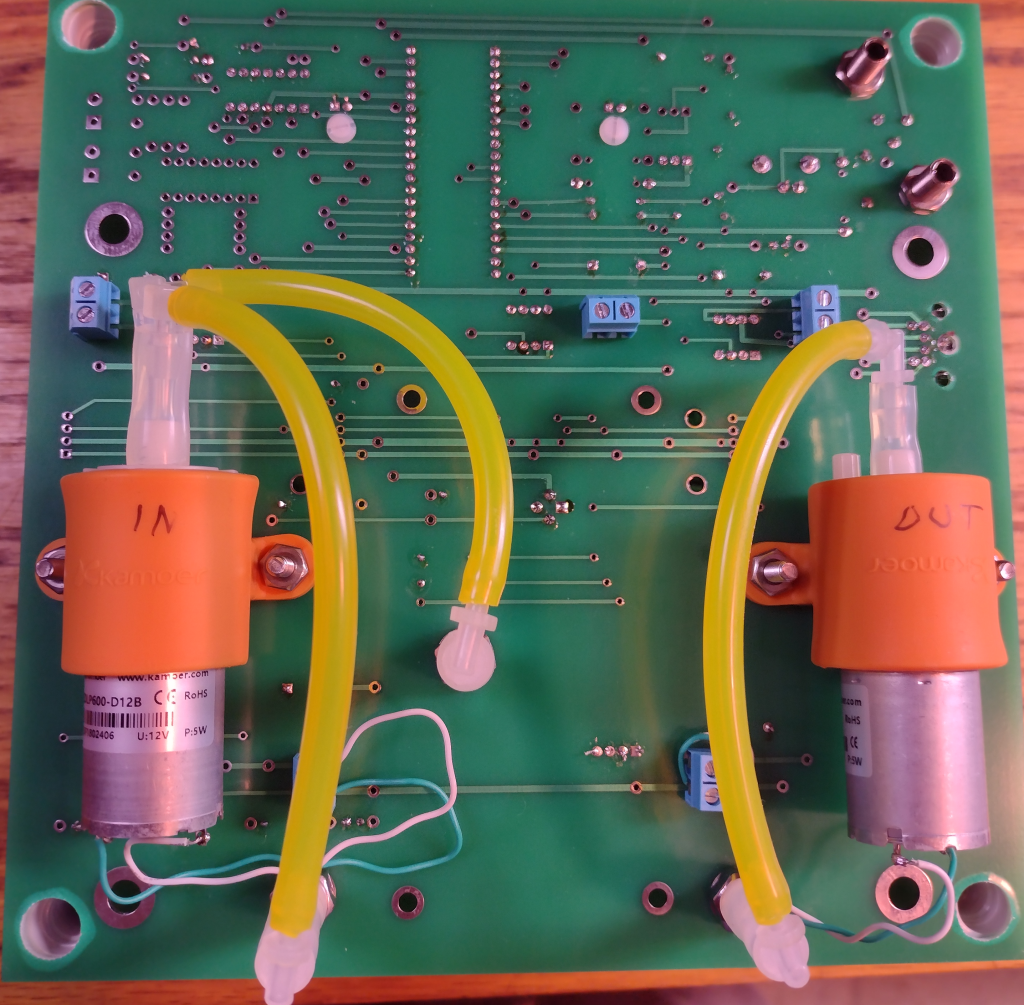
Basic PI has pumps on back to send air to and from nodules or plants. 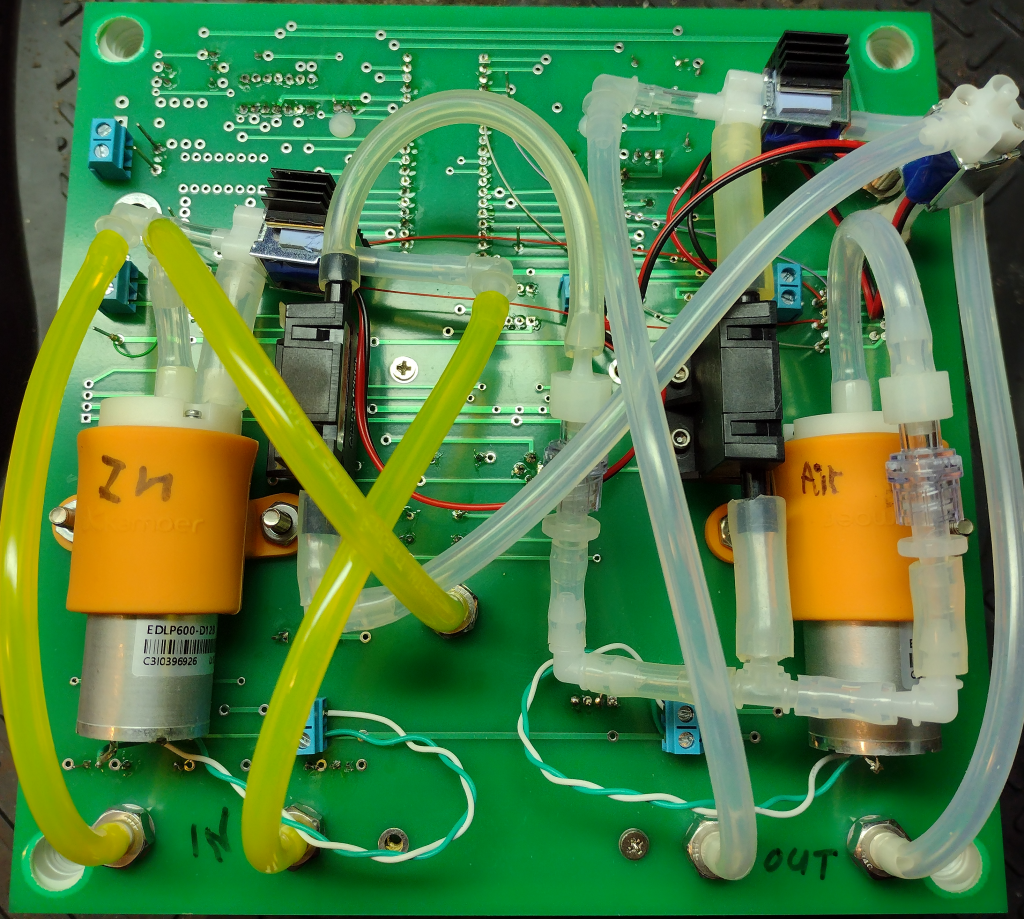
To mix gases to measure NH3-per-CO2 efficiency, add solenoid valves and mass flowmeters yourself (recommended) or buy the deluxe PI. 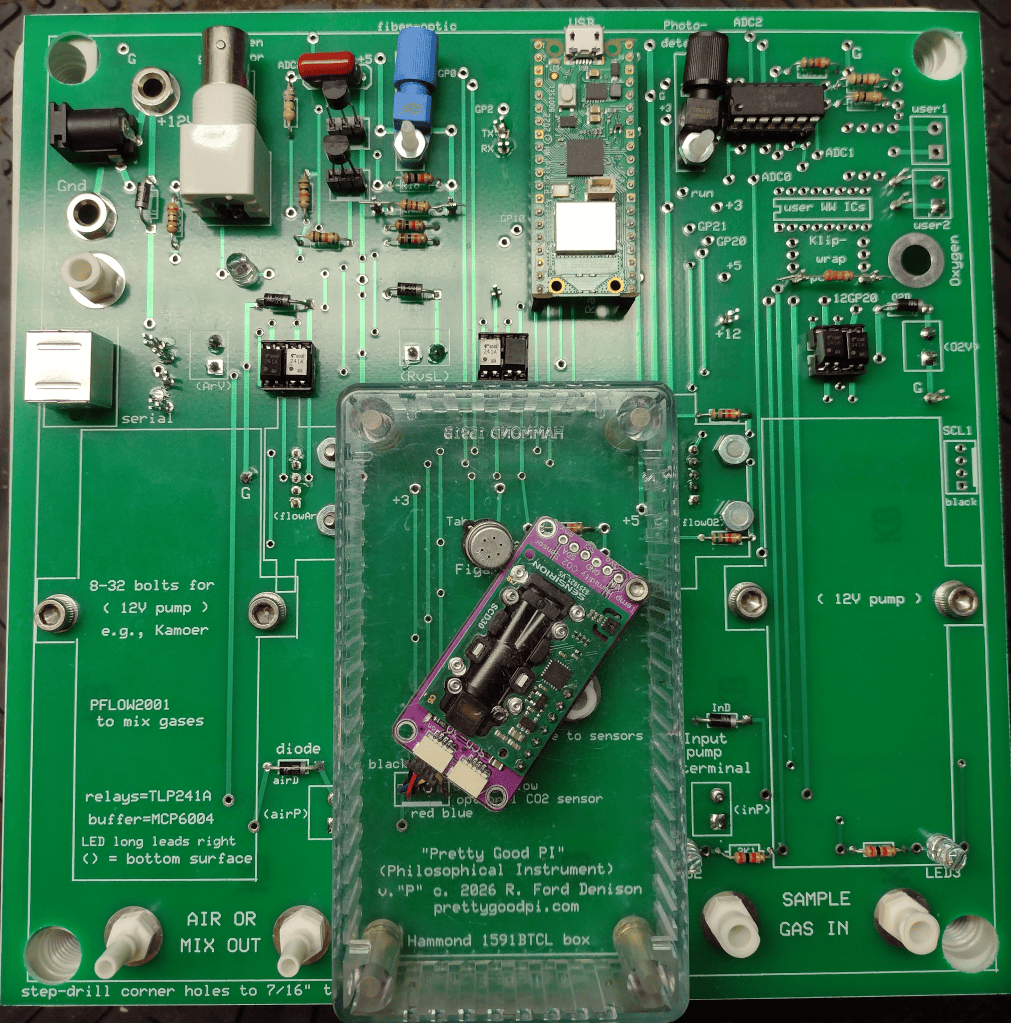
To measure NH3-per-CO2 efficiency, you also need to plug in a CO2 sensor (included in deluxe PI) next to the H2 sensor. 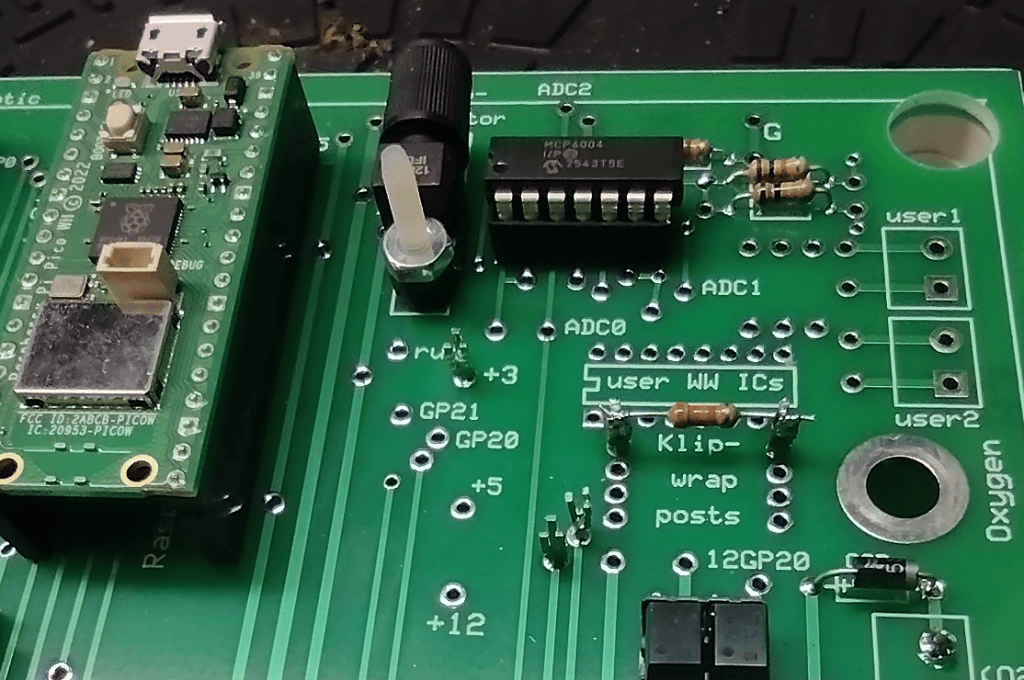
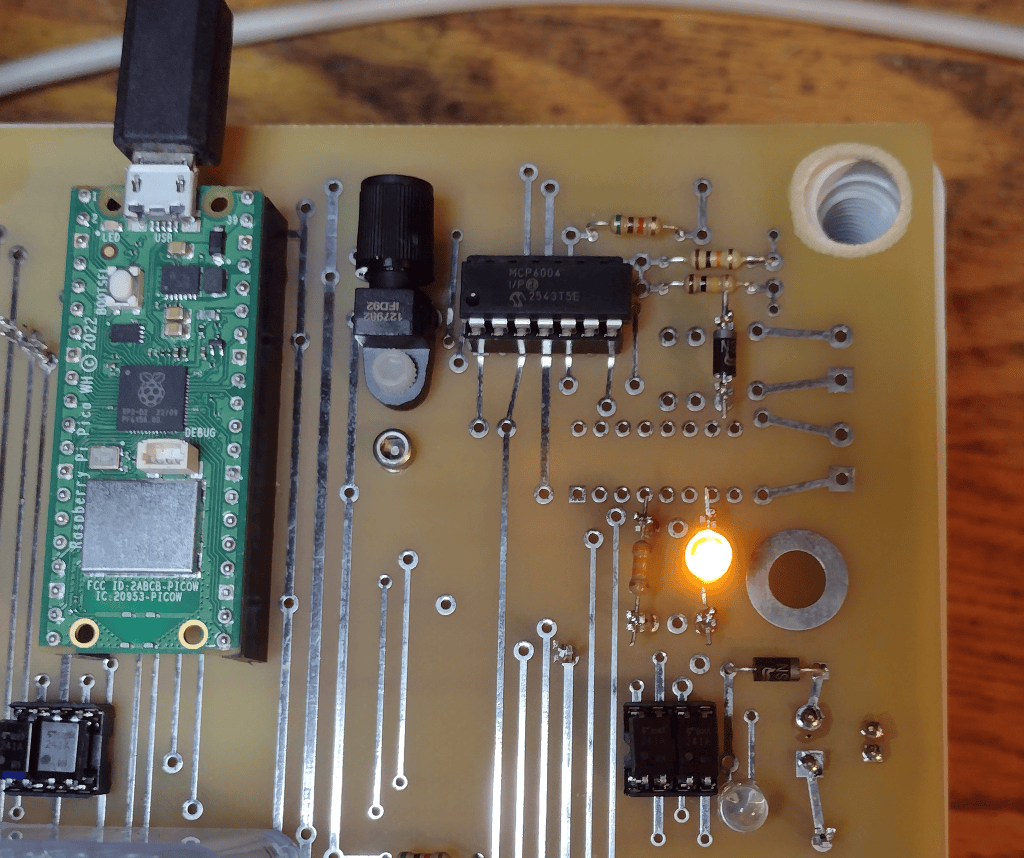
You can even modify a PI to add new functions — at your own risk!
coming soon: a python-powered system to study biological nitrogen fixation!
The basic Pretty-Good Philosophical Instrument (“Pretty-Good PI” or “PI” for short) measures hydrogen production (proportional to nitrogen fixation) by root nodules. In addition to a PI, you’ll need a 12-volt power supply and a Raspberry Pi host computer, which controls one or two PI board(s), displays graphs, and saves data. You’ll need to download and run open-source Python software for the host computer and the PI(s). To measure optical density of bacterial cultures (or light transmittance by leaves, a proxy for nitrogen content), download a file to 3-D print an attachment that connects to fiber-optic components on the PI.
For more-complex assays like NH3-per-CO2 efficiency (Oono et al., 2020) or nodule oximetry (Denison & Layzell, 1991), install solenoid valves and mass flowmeters yourself (to gain expertise for future trouble-shooting), or splurge on the deluxe version. These assays need compressed gases.
Is “Pretty Good” Good Enough?
The PI’s Python-driven approach reduces costs and expands potential uses, but this flexibility comes with tradeoffs. Trouble-shooting interactions among the biological system, the PI hardware, and the Python programs running on PI and host can be challenging. Your first basic PI is returnable for a full refund, in case you can’t get it to work with your nodules or plants. Subsequent orders are nonreturnable.
The PI may be less accurate or less portable than more-expensive devices optimized for some subset of the measurements the PI can make. For example, adding a $59 CO2 sensor to the PI would let you expand measurement options to include photosynthesis or respiration, but its reported accuracy of +/- 30 ppm might limit it to relative comparisons of genotypes or treatments. But plants of the same genotype vary enough that absolute accuracy may be less important than controls and replication.
Some specific limitations are addressed below. If you don’t understand these limitations (or are too busy to read on), the PI is not for you. Soldering is only required if you want to add something to the prototype area. But if downloading software, using a screwdriver, learning a little Python, or rearranging the flexible-tubing connections on the back of the PI sound like overwhelming hassles rather than educational or research opportunities, please don’t order a PI.
The PI’s central function is to measure production of hydrogen gas, a byproduct of nitrogen fixation (Schubert and Evans, 1976). Measuring hydrogen production is faster, easier, and less dangerous than the old actetylene-reduction method to estimate nitrogen-fixation rate. However, some nitrogen fixers recycle hydrogen — most cyanobacteria and about 20% of soybean-nodulating rhizobia strains (Keyser et al., 1984) — so hydrogen release is not always a useful proxy for nitrogen fixation. Even when nodules don’t recycle hydrogen, uptake of hydrogen by bacteria in field soils could be a problem.
Another limitation applies to both the hydrogen and acetylene methods. In saturating (10%) acetylene, 100% of nitrogenase activity goes to reduction of acetylene to ethylene, which can be measured by gas chromatography. Similarly, in a nitrogen-free atmosphere (Ar:O2), 100% of nitrogenase activity goes to hydrogen production. In each case, measured activity should match nitrogen fixation in air — for a few minutes. However, either approach prevents actual N fixation, often triggering host “sanctions” against nonfixing nodules (Kiers et al., 2003). These sanctions can decrease nitrogenase activity, making measurements increasingly unrepresentative of undisturbed plants.
To prevent this “acetylene- or argon-induced decline” (Minchin et al., 1983) you can measure hydrogen production in air (or use subsaturating acetylene). However, using those measurements to estimate the nitrogen-fixation rates of undisturbed plants in air requires assuming or measuring the EAC or Electron Allocation Coefficient (Maloney et al., 1994). For example, if hydrogen production doubles after switching from air to Ar:O2, then half of nitrogenase activity in air went to to nitrogen fixation and half to hydrogen production. Measuring N-per-CO2 nitrogen-fixation efficiency, including EAC, requires additional components and compressed gases (Oono et al., 2020).
Because the sensitivity of the PI’s sensor to hydrogen depends on the background gas (Layzell et al., 1984), the PI hardware and software support electrolytic generation of hydrogen to calibrate the sensor in the humid air returning from plants (in each gas mix, if you add gas-mixing capability).
The sensor also responds to methane, ethanol, or carbon monoxide, so it will not be useful if your samples contain more than one of these gases. On the other hand, it might be possible to (for example) estimate methane production from soils where hydrogen production is negligible. Or, maybe you could use sensor response to PI-controlled hydrogen-production to measure oxygen concentration. The more exploring such options (or wire-wrapping your own components in the small user area) appeals to you, the more likely you are to be happy with a PI.